
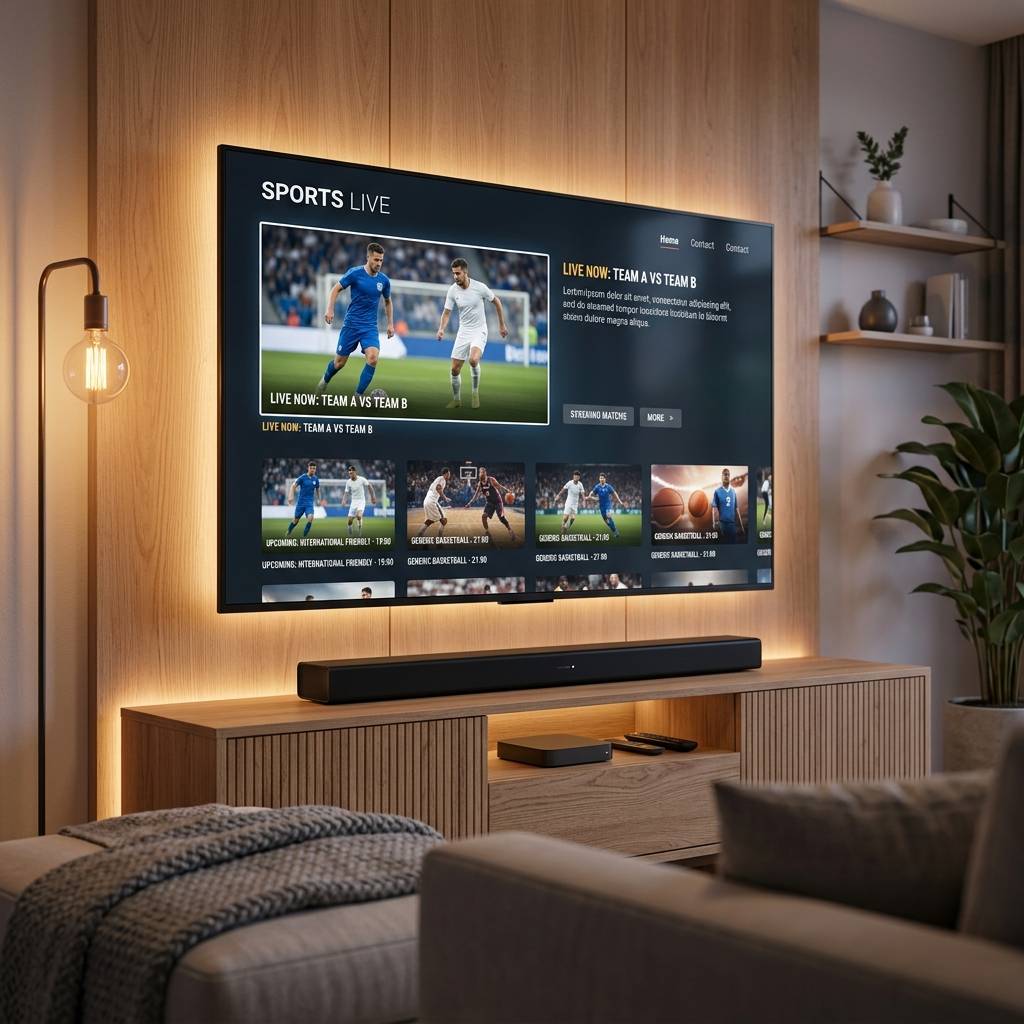
Best Streaming Options for Live Sports and How to Watch Every Game Without Cable

IPTVBestStream Editorial Team
IPTV Buying Guides for the UK & Canada
Best Streaming Options for Live Sports and How to Watch Every Game Without Cable
Sports fans have been the most reluctant cord cutters for a decade and the hesitation was historically justified. Live sports rights were fragmented across cable-exclusive channels that had no streaming equivalent. Cutting cable meant missing games. Missing games was unacceptable. So sports fans kept paying cable bills that grew larger every year subsidizing hundreds of channels they never watched just to maintain access to the handful carrying their teams.
That calculation has changed fundamentally. Every major professional league every major college conference and virtually every significant sporting event is now available through streaming platforms. The coverage is not partial or delayed. Games broadcast live in full HD and 4K on streaming services with the same commentary production quality and real-time delivery that cable provided. The streaming experience often exceeds cable with features like multi-view simultaneous game watching alternative camera angles interactive statistics overlays and instant replay access that cable broadcasts never offered.
The remaining complexity is not about availability but about distribution. Sports broadcasting rights are sold to multiple providers across regional and national boundaries. Your local team games may stream on a different service than national broadcasts of the same sport. Playoffs may move to a different provider than regular season games. Understanding this distribution landscape and selecting the right combination of services for your specific sports interests is the key to replacing cable completely without missing any live action.
Types of Sports Streaming Services and What Each Category Offers
Sports streaming services fall into three distinct categories and understanding each category helps you build the right combination for your specific viewing needs. Each category serves a different role in sports coverage and most cord-cutting sports fans subscribe to services from two or more categories to achieve complete coverage.
Live TV streaming services replicate the traditional cable channel lineup through internet delivery. These services carry dozens of live channels including regional sports networks national sports channels and local broadcast affiliates that carry live games. Monthly costs range from thirty-five to seventy-five dollars depending on the service and plan tier. These services provide the broadest sports coverage in a single subscription because they carry the same channels that cable subscribers use for sports viewing.
Dedicated league streaming platforms are operated by individual sports leagues and provide direct access to that league games through a standalone subscription. These platforms typically carry out-of-market games that are not broadcast in your local area along with condensed replays full game archives and exclusive shoulder programming like analysis shows and draft coverage. Monthly or annual subscriptions range from fifteen to thirty dollars per month and can be purchased seasonally to cover only the active competition months.
Free ad-supported sports streaming has expanded significantly with certain sports events and highlight coverage available through free platforms without any subscription. While free platforms rarely carry complete live game broadcasts they provide valuable supplementary coverage including pre-game analysis post-game highlights interview content and some live event streaming for sports properties that distribute free tier content as a fan engagement strategy.
Comparing Live TV Streaming Services for Sports Coverage Breadth
Live TV streaming services vary significantly in their sports channel lineups despite offering similar overall channel counts. The specific sports channels included in each service determine which games you can access making channel lineup comparison essential before committing to a monthly subscription for sports viewing purposes.
Regional sports networks represent the most important and most variable component of sports streaming coverage. These channels carry your local professional team games and their availability varies by streaming service and by geographic market. Some live TV services carry regional sports networks in most major markets while others carry them in fewer markets or not at all. Check which regional sports networks are available in your specific market on each service before subscribing because losing access to local team broadcasts defeats the primary purpose of sports streaming for most fans.
National sports channels that carry league-wide broadcasts marquee matchups and playoff tournaments are included on most live TV streaming services but specific channel availability varies. Some services carry all major national sports channels at the base subscription tier while others require upgraded add-on packages that increase the monthly cost. Verify that the national channels carrying your primary sports are included in the base package rather than assuming comprehensive sports coverage at the advertised base price.
Broadcast network affiliates that carry major sporting events including championship games and premier matchups are available on most live TV streaming services in most markets. Local affiliate availability depends on your geographic location with major markets receiving all broadcast affiliates and smaller markets potentially missing some. These broadcast channels also transmit free over-the-air through an antenna providing a free backup for marquee events that air on broadcast networks.

Multi-Screen Viewing and Watching Multiple Games Simultaneously
One of the most compelling streaming advantages over cable for sports fans is the ability to watch multiple games simultaneously across different devices. Cable required a separate television with a separate cable box for each simultaneous game. Streaming allows multiple simultaneous streams on phones tablets laptops and streaming devices throughout your home all from a single subscription.
Most live TV streaming services allow three to five simultaneous streams depending on the service and plan tier. A household with the right plan can watch three different games on three different screens simultaneously. One game on the living room television. A different game on a tablet in the kitchen. A third game on a phone at the desk. Each stream operates independently with separate channel selection and playback controls.
Some streaming services offer built-in multi-view features that display multiple games on a single screen. These split-screen or quad-screen views show two to four simultaneous game broadcasts on one television with the ability to select which game audio plays and which game occupies the primary viewing position. Multi-view is particularly valuable during tournament events where multiple compelling games happen simultaneously and flipping between channels means missing action in the game you just left.
Recording capabilities through cloud DVR complement live multi-screen viewing by capturing games you cannot watch simultaneously for later viewing. Record the game happening at the same time as the one you are watching live and view the recording immediately after your live game concludes. Unlimited cloud DVR storage available on some service tiers allows recording every game across every sport without worrying about storage limits or recording conflicts.
Picture Quality and Technical Performance for Sports Streaming
Sports viewing demands higher technical performance from a streaming service than movies or scripted programming because live sports contain rapid motion fine detail and real-time action where even brief quality drops are immediately noticeable. A buffering pause during a crucial play ruins a moment that cannot be rewound in live viewing. Motion blur during fast action reduces the visual experience below what the same broadcast delivers through traditional cable distribution.
The best sports streaming services deliver 1080p at sixty frames per second for most live sports with select events available in 4K HDR. The sixty frames per second specification is particularly important for sports because it produces smooth motion during fast action like players sprinting across a field or a ball traveling at high velocity. Services that stream sports at thirty frames per second produce noticeably choppier motion that detracts from the live viewing experience compared to the sixty-frame smoothness that cable traditionally delivered.
Stream start latency varies between services and affects the social viewing experience. Some streaming services deliver their feed five to thirty seconds behind the real-time broadcast. When a friend watching through a different service or through cable texts about a goal before you see it the delay diminishes the shared experience. Services with lower latency deliver events closer to real-time reducing the spoiler risk during simultaneous social viewing.
Streaming reliability during peak sports viewership is the ultimate test of a service technical infrastructure. Major sporting events generate enormous simultaneous viewer counts that stress streaming platforms. Services with robust content delivery networks handle these peaks without degradation while less capable services may experience quality drops or buffering during the highest-demand moments. Review user feedback from recent major events to assess how each service performs under peak load before committing to a subscription specifically for live sports viewing.
Cost Optimization and Seasonal Subscription Strategies
The most significant financial advantage of streaming sports over cable is the ability to subscribe and cancel month-to-month without contracts or penalties. Cable requires a twelve-month commitment covering all twelve months of the year including months when your primary sport is not in season. Streaming allows you to subscribe only during active seasons and cancel during off-season months paying only for the months you actually watch.
A seasonal subscription strategy can reduce your annual sports streaming cost by thirty to fifty percent compared to year-round subscription. If your primary sport runs a six-month season you pay for six months and cancel for the remaining six. A seventy-dollar monthly live TV service costs eight hundred forty dollars annually with year-round subscription but only four hundred twenty dollars with seasonal subscription covering the same active-season viewing at half the annual price.
Multiple subscriptions can be staggered across different sports seasons rather than running simultaneously. Subscribe to the service carrying your spring sport during spring months. Cancel and subscribe to the service carrying your fall sport during fall months. Each subscription covers a specific season and the total annual cost represents only the months of active sports viewing across all your interests rather than a flat annual fee covering dead months.
Free alternatives supplement paid subscriptions during periods between your primary sports seasons. Free ad-supported platforms carry highlight coverage analysis programming and some live events during the off-season months keeping you connected to your sports interests without maintaining a paid subscription during months with minimal live game content relevant to your viewing interests.
Building Your Personal Sports Streaming Package
The optimal sports streaming combination is personal to your specific team loyalties sport interests and market location. A generic recommendation cannot account for the regional broadcast rights that determine which service carries your specific local teams. Building your package requires identifying exactly which services carry your must-watch content then assembling the minimum combination that provides complete coverage.
Start by listing every sport and team you follow actively enough that missing a live game would genuinely disappoint you. Separate these into must-watch and nice-to-have categories. Your streaming package must cover the must-watch list completely. The nice-to-have list helps choose between otherwise equivalent services but should not drive your subscription decisions or increase your total cost.
Research which service carries each item on your must-watch list in your specific geographic market. Check regional sports network availability for local team coverage. Verify national broadcast channel inclusion for marquee events and playoffs. Confirm league platform coverage for out-of-market games if you follow teams outside your local area. This research produces a clear picture of the minimum service combination required for your complete sports coverage.
Calculate the total monthly and annual cost of your identified service combination and compare it to your current or most recent cable sports package cost. In the vast majority of cases the streaming combination costs less while providing additional benefits that cable never offered including mobile viewing flexibility multi-screen simultaneous watching cloud DVR recording and on-demand replay access. The transition from cable to streaming for sports viewing is a financial upgrade and a feature upgrade simultaneously for virtually every sports fan who takes the time to build a properly researched streaming package.
Frequently Asked Questions
Ready to get started?
Try our service risk-free with a 24-hour free trial.
Related Articles

Best Projectors for Movies and How to Build a Home Cinema on Any Budget
A comparison guide to choosing the best projector for home movie watching covering brightness levels and resolution options and throw distance and screen selection and room setup for an immersive cinema experience on any budget.
Best TV for Your Bedroom and How to Pick the Right Size and Features for Relaxed Viewing
A comparison guide to choosing the best bedroom TV covering ideal screen sizes for typical bedroom viewing distances and panel types and sleep timer features and smart platform options for comfortable bedside streaming.

Streaming Service Comparison and How to Pick the Right Platforms for Your Household
An honest comparison of streaming service categories covering content library strengths and pricing structures and device compatibility and simultaneous stream limits and which platforms deliver the best value for different household types.